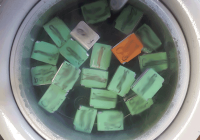
Constructing An Emergency Slide Warmer – Sometimes lab equipment may not be available, so one has to become inventive. An emergency slide warmer is one such piece of equipment! By Jos Mottershead Sometimes lab equipment may not be available, so one has to become inventive. An emergency slide warmer is one such piece of equipment! Easily constructed –… Read More: Warming Semen in the Field »
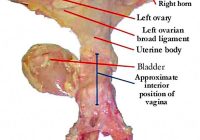
The Equine Uterus Dissected – Here we show the gross aspects of a mare reproductive tract dissected with labels and explanations. The caudal aspect (back end) of the cervix protrudes into the vagina and is often described as having an appearance and feel of a “small volcano”. There is a depression in the center, which is the opening… Read More: The Mare Reproductive Tract Dissected »
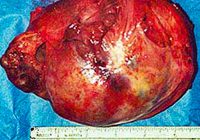
Granulosa Cell Tumor – Capable of affecting reproductive ability and overall disposition, the GCT is one of the most common ovarian tumors to be found in the mare. By Jos Mottershead Granulosa cell tumors – GCT – or granulosa-thecal cell tumors are one of the most common ovarian tumors to be found in equines. They are usually benign… Read More: Most Common Ovarian Tumor »
Early Embryonic Loss and Genetics – Chromosomal translocations in horses may be a cause of early pregnancy loss or pregnancy failure. Dr. Teri Lear discusses the issue. By Dr. Teri L. Lear Chromosomes are large segments of DNA wound around special proteins within each cell’s nucleus. They contain nearly all of the body’s genetic material. Horses have 64… Read More: Chromosome Translocation »
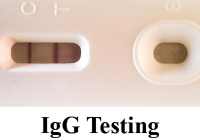
Failure of Passive Transfer in Neonatal Foals – low IgG – can lead to potentially fatal complications, but is easily managed in most with testing and supplementation By Jos Mottershead Foals are born with little or no immunity to infection from outside organisms. There is a minimal amount of immunoglobulin-M (IgM) produced in-utero, but insufficient to ensure adequate… Read More: Failure of Passive Transfer »
Protocols for Mare Management with Cooled-Shipped or Frozen Semen – methods to time breeding of mares both with and without use of pharmacological manipulation. By Jos Mottershead Mare management with cooled-shipped or frozen semen can often seem daunting but is a key element for success or failure. One can use or forgo pharmacological manipulation, and we discuss here… Read More: Mare Management with Cooled-Shipped or Frozen Semen »
The Semen Looked Bad – Or Is It? Maybe not as bad as you think! A review of what constitutes a cooled semen dose, looking at some newer research and older dogma. By Jos Mottershead and Kathy St. Martin During the course of the breeding season – especially on the EquineRepro Facebook Group that we manage – we… Read More: You’re Ready to Breed Your Mare – But is the… »
Embryology – Different Stages of the Early Equine Pregnancy – Equine embryology – early pregnancy images. A pictorial showing embryonic developmental images through to the fetal stage of 50 days. All day numbers given here are the number of days post-ovulation on the conceiving cycle. The 32 to 64 cell stage of a developing embryo is the morula.… Read More: Early Equine Embryology »
The Dirty Mare – Noted reproductive veterinarian Dr. Jon Pycock discusses techniques and methods related to successfully managing and breeding the dirty mare. By Dr. Jonathan F Pycock, B.Vet.Med., Ph.D., D.E.S.M., M.R.C.V.S. Equine Reproductive Services, Messenger Farm, Ryton, Yorkshire Introduction One of your main objectives whether owning or working with brood mares should be to produce the maximum… Read More: Identifying, Treating and Breeding the “Dirty” Mare »
Thawing Frozen Semen and Preparing it for Artificial Insemination. – Techniques and methods related to handling and thawing frozen semen prior to breeding a mare. Not as complicated as some might believe! By Jos Mottershead In order for maximum reproductive efficiency to be gained from the use of frozen equine semen, it is essential that the product be… Read More: How to Thaw Frozen Semen to Breed the Mare »