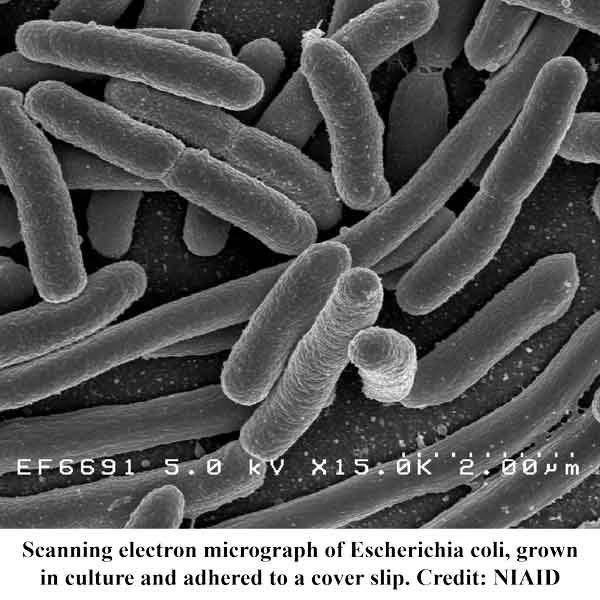
Semen Microbiome Influence on the Mare Uterine Microbiome While semen-uterine microbiome interactions have been described in humans, equivalent data in horses was absent. Using a cross-species insemination model, this study investigated whether the male seminal microbiome influences the mare uterine microbiome and whether post-breeding microbiome composition affects embryo recovery. Study Design: 22 fertile mares inseminated with raw semen… Read More: Semen Microbiome Influence on the Mare Uterine Microbiome »
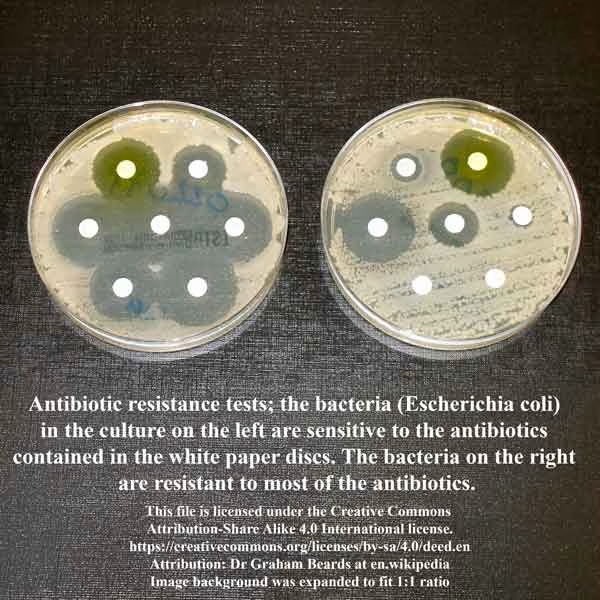
Antimicrobial Resistant Bacteria in Cooled Stallion Semen and Post-Insemination Uterine Lavage Fluid Antibiotic addition to cooled semen extenders is standard practice for bacterial control during storage, yet this may contribute to antimicrobial resistance development and introduce resistant organisms into the mare’s uterus at insemination. This study screened commercial cooled semen and post-insemination uterine lavage fluid for the presence… Read More: Antimicrobial Resistant Bacteria in Cooled Stallion Semen »
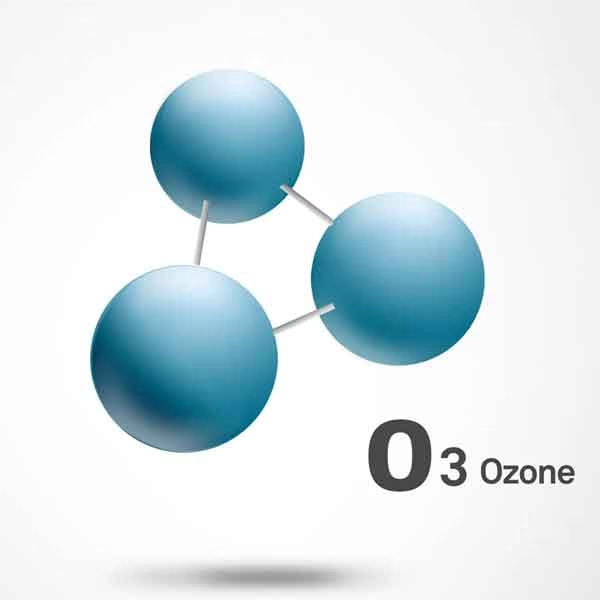
Effect of Ozone Gas on Stallion Semen Quality and Microbial Contamination Ozone has demonstrated antimicrobial properties through destabilization of bacterial cell wall phospholipids and inhibition of fungal cell division, however the effect of ozone gas on stallion semen has not been widely evaluated. Given growing interest in reducing antibiotic use in semen extenders, this study evaluated whether ozone… Read More: Effect of ozone gas on stallion semen »
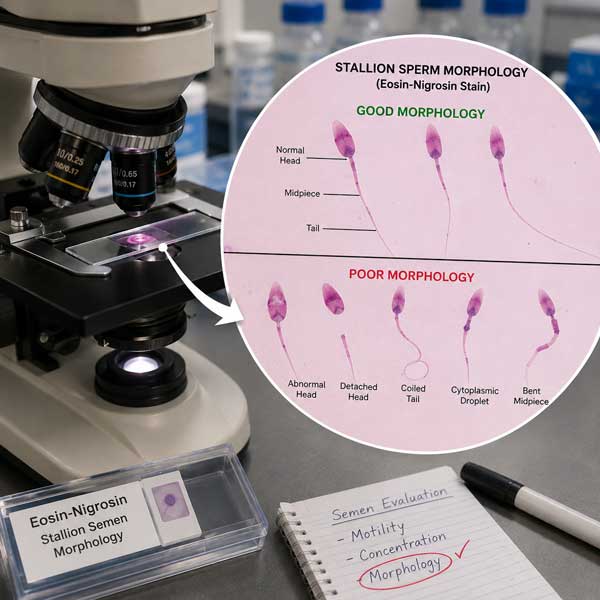
Semen Assessment as a Fertility Predictor in Stallions Accurate stallion semen assessment as a fertility predictor need not rely on expensive equipment. This study investigated whether basic light microscopy assessments of sperm motility, membrane integrity, and morphology could reliably distinguish fertile from sub-fertile stallions under field conditions. Study Design: 24 frozen semen batches from 24 Arabian and Straight… Read More: Semen Assessment as a Fertility Predictor »
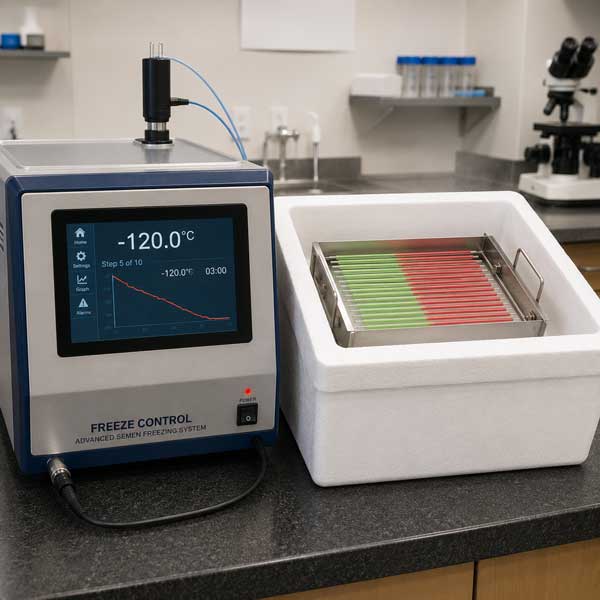
Post-Thaw Sperm Motility Comparing Automated Freezer vs. Styrofoam Box Across Multiple Cryoprotectants Standardizing equine semen cryopreservation is challenging due to variability in freezing equipment and cryoprotectant selection. This study compared a computer-controlled automated freezing machine vs. Styrofoam box method across four cryoprotectant combinations to assess post-thaw sperm motility outcomes. Study Design: 4 stallions (ages 4–20); 4 semen collections… Read More: Automated Freezing Machine vs. Styrofoam Box »
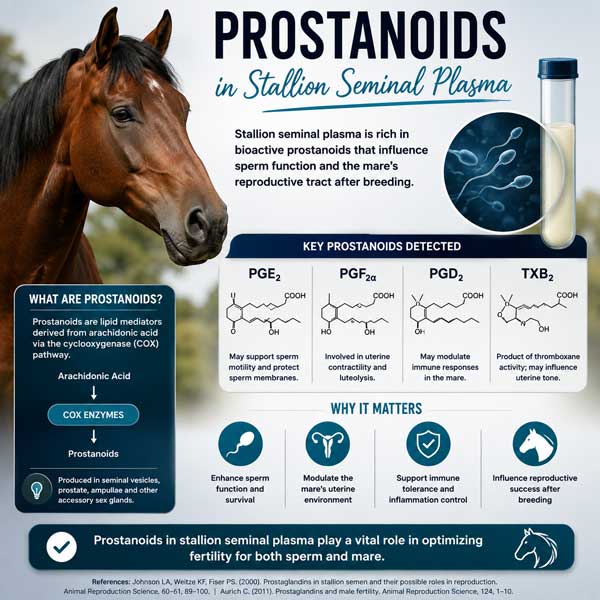
Prostanoids as Markers of Oxidative Stress in Stallion Semen Standard pre-processing semen assessment does not reliably predict quality after chilled storage. Oxidative stress in stallion semen during cooling damages sperm membranes via lipid peroxidation, reducing fertilizing potential. This study investigated whether seminal plasma prostanoids — established lipid peroxidation biomarkers — could predict chilled semen quality in stallions. Study… Read More: Prostanoids as Markers of Oxidative Stress in Stallion Semen »
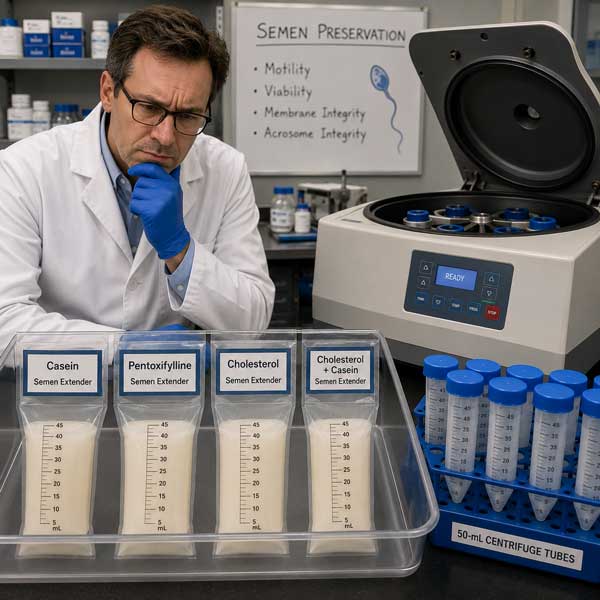
Pre-Freeze Centrifugation Extenders Selection for Optimizing Equine Semen Cryopreservation Cryopreservation exposes spermatozoa to significant physical and chemical stress, making pre-freeze semen centrifugation extender selection critical for maintaining sperm viability and membrane integrity. This study compared four extender formulations — with and without cholesterol and pentoxifylline — to identify the most effective option for pre-centrifugation use in equine semen… Read More: Pre-Freeze Semen Centrifugation Extenders »
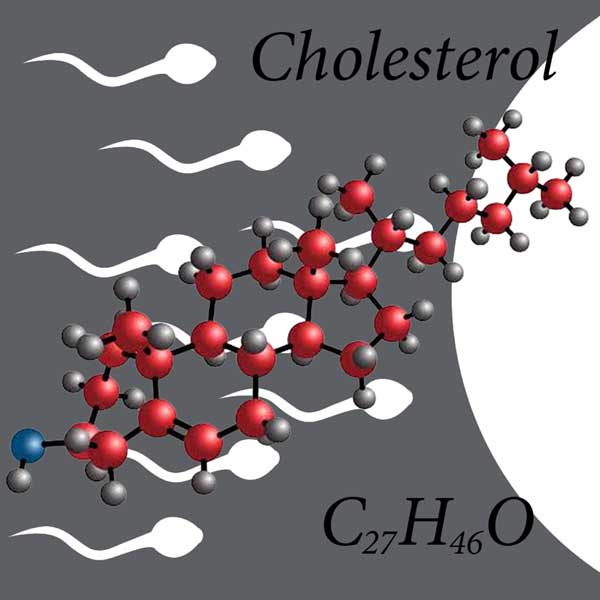
Increasing Sperm Membrane Cholesterol Improves Cold Shock Resistance and Cryosurvival in Stallions Stallion sperm are inherently sensitive to cold shock due to a low cholesterol-to-phospholipid membrane ratio (0.38–0.45), compared to cold-shock-resistant species such as humans and rabbits (0.88–0.99). This study investigated how much cholesterol supplementation — delivered via cholesterol-loaded cyclodextrins — is required to protect stallion sperm from… Read More: Cholesterol Improves Cold Shock Resistance »
Comparing DNA Damage Assays in Equine Sperm Preservation Background & Purpose Preserving sperm DNA integrity is critical for successful equine assisted reproduction. While low-temperature storage is traditional, above-15°C methods have emerged to reduce cold shock damage. Oxidative stress during any preservation method can cause DNA damage. This study compared the sensitivity of two DNA damage assays — the… Read More: Comparing DNA Damage Assays »
Dismount Semen Sample Evaluation, Post-Mating Antibiotics, and Mare Clinical Parameters Background Purpose In Thoroughbred breeding, in-hand mating is the only permitted method, and dismount semen sample evaluations are routinely collected to confirm ejaculation and assess semen quality. Post-mating uterine antibiotic infusions (ceftiofur or ticarcillin) are commonly used to reduce infection risk. This study examined whether dismount sample characteristics… Read More: Dismount Semen Sample Evaluation »