Predicting Foaling in the Mare: What Actually Works
Kathy St. Martin and Jos Mottershead
Waxing: The Least Reliable Sign
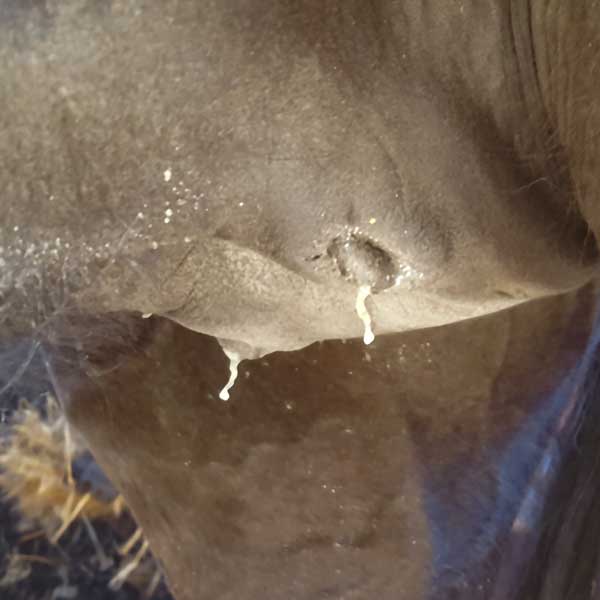
“Waxing” clearly visible descending from the udder
There are many signs predicting foaling in the mare: softening of the tail head and vulva, enlargement of the udder, subtle changes in body shape, occasional shifts in disposition, and “waxing”—the appearance of wax-like droplets on the ends of the teats. Of all these indicators, waxing is probably the most misunderstood. Mare owners often say, “She waxed up last night, so she’ll probably foal tonight or tomorrow,” and then spend several sleepless nights waiting. In our experience, waxing can appear as much as a month before foaling, though two weeks is more typical. In short, it’s not a reliable predictor on its own.
The Milk Test: Sight and Taste
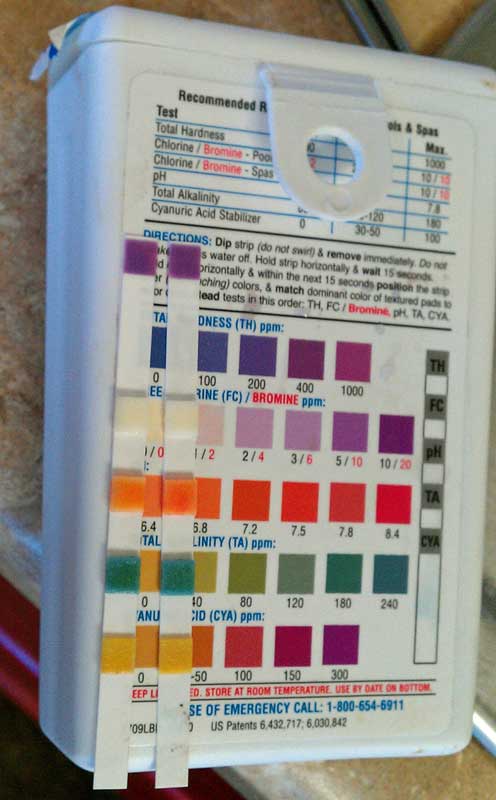
Milk evaluation at 331 days of gestation – in this case the day of foaling – shows 400 ppm calcium and a very slight drop to a pH level of 6.4
So what is reliable? Over the years, we’ve found a simple, non-laboratory method that consistently provides the best insight: examining a few drops of the mare’s milk once a day—twice daily once changes begin. We evaluate the mare at roughly the same time each evening, usually at feeding. Express just a drop or two into the palm of your hand. Well before foaling, the liquid will be clear, slightly yellow, and translucent. Typically within the final 24 hours before foaling, it becomes almost opaque, shifting from yellow to white or cream. It may take witnessing one foaling to confidently recognize the difference, but once you’ve seen it, you won’t mistake it again.
Another easy indicator for predicting foaling in the mare is the taste test once the milk begins to look like milk rather than clear fluid. Well before foaling, it tastes salty—similar to sweat. As foaling approaches, the taste becomes more bland and the milk resembles watered-down skim milk. Typically within 24 hours of foaling, it becomes slightly sweet and creamy white. The “taste test” should only be performed on healthy mares with clean teats and is best regarded as an experienced breeder’s field assessment rather than a substitute for laboratory or stall-side testing.
Medically, these changes occur because electrolyte levels shift: calcium, potassium, and magnesium rise, while sodium and chloride drop, with the sodium-to-potassium ratio reversing on average about three days before birth. Calcium is the best-studied of these markers and gives a useful benchmark: mammary secretion calcium levels above roughly 200 ppm are associated with a 54% probability of foaling within 24 hours, an 84% probability within 48 hours, and a 97% probability within 72 hours (Ley et al., 1993). Calcium concentrations values approaching or exceeding 400 ppm are commonly associated with foaling within about 24 hours, although individual mares vary. Today, many veterinarians also use mammary secretion pH as an adjunct to calcium testing. A decline in pH, particularly when accompanied by increasing calcium concentrations, generally improves prediction of foaling compared with either test alone. Commercial stall-side calcium assays, pH strips or meters, and even inexpensive swimming pool water-hardness test strips can detect these changes, but none are quite as quick or convenient as the simple taste test, although stall-side calcium/pH testing provides a more objective assessment.
A note on maiden mares: first-time mothers often show a slower, less pronounced mammary and electrolyte shift than mares that have foaled before, which can make both the taste test and calcium testing less predictable in maidens (Macpherson & Paccamonti, 2011).
Video Cameras

Solar Powered Monitoring Camera
Video cameras have also become invaluable tools for predicting foaling in the mare. Affordable, reliable systems now work with limited Wi-Fi or even directly with a cell phone. For barns without power, there are solar-powered units economically available. All our foaling stalls are equipped with multiple cameras, making monitoring far easier and eliminating the need to camp outside the stall. You can watch your mare comfortably from home and check on her as needed. Automated video-analysis systems for detecting parturition in real time are an active area of research, reflecting the increasing value placed on continuous visual monitoring.
Foaling Alarms
Foaling monitors have further improved the process. Several halter-mounted systems—such as Smart Foal—alert you when the mare lies down for an extended period. While helpful, false alarms are common since mares lie down throughout pregnancy. Cameras in the foaling stall help distinguish between a false alarm and the real thing.
Other systems use a transmitter sewn into the mare’s vulva. A magnet is sewn on the opposite side, and when the foal’s feet appear, the magnet separates from the transmitter, sending a signal to the receiver. This category of vulva-mounted transponder device has performed well in independent testing: one recent study of a similar system correctly detected 96.5% of foalings, with a 96% sensitivity rate and a 91% specificity rate, and noted that false alarms were most often triggered by the mare rubbing her tail against the stall wall (Lindinger & Wehrend, 2023).
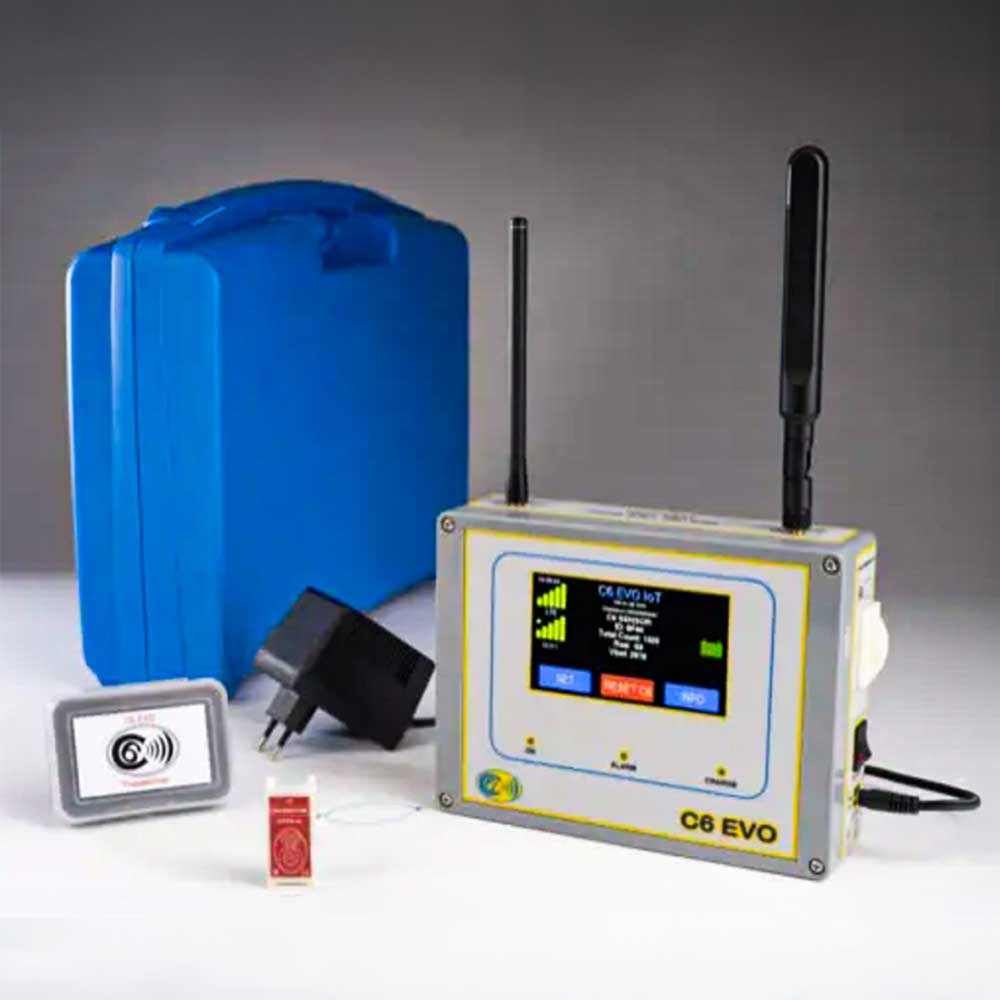
The C6-EVO Foaling Alarm Package
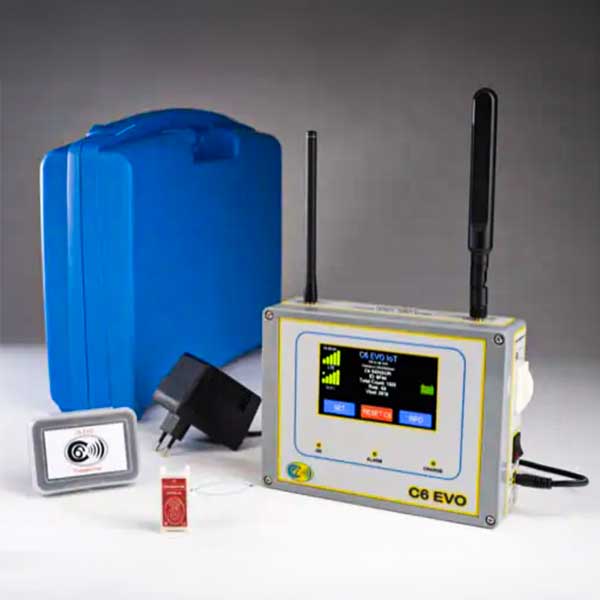
The Foalert system has been available in the U.S. for years and is effective, though it requires good cell service and its transmitters last for about ten uses. The C6 Evos foaling system (www.foaling-alarm.com) is similar to the Foalert in that it is a transmitter that is sewn into the mare’s vulva. According to the manufacturer, its transmitters last up to 200 uses or two years, making them far more economical. The system is stated to work via both cell service and Wi-Fi, can call, text, and message multiple contacts via Telegram, and has a transmitter range of up to 1 km. (These figures are manufacturer specifications and have not been independently verified in peer-reviewed testing.)
More recently, wearable tail-mounted devices combining accelerometry and temperature monitoring have shown promising accuracy and may become increasingly useful as the technology matures.
Our Protocol
So what do we use here at Equine-Reproduction.com, LLC/Avalon Equine for predicting foaling in the mare? We combine several methods to narrow the foaling window. Every foaling stall has video cameras for continuous observation. We rely on the milk taste test to refine timing, and we use a foaling alarm. After switching from Foalert to the C6 Evos system, we have been impressed with its performance and features. It operates on both Wi-Fi and cellular service, has a 1 km transmitter range, supports up to eight contacts, and allows us to check transmitter battery life. We typically place transmitters at 320 days—and since adopting the C6 system, we haven’t missed a single foaling.
Words of Caution
Note: There are no absolutes in horse breeding. While these techniques are helpful indicators, they will not apply to every mare. Some mares show changes within 24 hours of foaling; others may foal just hours after the milk shifts. Rarely, milk changes may appear two or three days before foaling. In cases of placentitis, or following administration of the milk-promoting drug domperidone before foaling, mammary secretion changes become less reliable. Placentitis can disrupt the normal electrolyte progression, while domperidone commonly causes premature mammary development. These methods are excellent tools under normal circumstances, but they are guides—not guarantees.
If induction of parturition is contemplated, recognition of the electrolyte changes are an important part of determining if a successful outcome for the foal is likely following induction. We would not recommend that induction be carried out without such a check and the finding of appropriate electrolyte changes, as well as a number of other items that must be in place or checked, also with acceptable results. Acceptable mammary secretion electrolyte changes represent only one of several prerequisites before elective induction should be considered.
References and Resource Sources
Aoki, T., Shibata, M., Violin, G., Higaki, S., & Yoshioka, K. (2023). Detection of foaling using a tail-attached device with a thermistor and tri-axial accelerometer in pregnant mares. PLOS ONE, 18(6), e0286807. https://doi.org/10.1371/journal.pone.0286807
Aoki, T., Violin, G., Jikihara, T., Shibata, M., Higaki, S., Ozawa, T., Furukawa, E., & Yoshioka, K. (2026). Prediction of nocturnal foaling using ventral tail base surface temperature recorded by a wearable device attached to the mare’s tail. Animals, 16(2), 199. https://doi.org/10.3390/ani16020199
Canisso, I.F., Amorim, G.B.A.G., & Magalhaes, H.B. (2024). The effect of different storage temperatures over time on the pH of mammary gland secretions in periparturient mares. Animals, 14(17), 2598. https://doi.org/10.3390/ani14172598
Leadon, D.P., Jeffcott, L.B., & Rossdale, P.D. (1984). Mammary secretions in normal spontaneous and induced premature parturition in the mare. Equine Veterinary Journal, 16(4), 256–259. https://doi.org/10.1111/j.2042-3306.1984.tb01922.x
Ley, W.B., Bowen, J.M., Purswell, B.J., Irby, M., & Greive-Crandell, K. (1993). The sensitivity, specificity and predictive value of measuring calcium carbonate in mares’ prepartum mammary secretions. Theriogenology, 40(1), 189–198. https://doi.org/10.1016/0093-691X(93)90352-6
Lindinger, H., & Wehrend, A. (2023). Investigating the suitability of a transponder-based birth monitoring system attached to the vulva of a mare. Veterinary World, 16(12), 2451–2456. https://doi.org/10.14202/vetworld.2023.2451-2456
Macpherson, M.L., & Paccamonti, D.L. (2011). Induction of parturition. In A.O. McKinnon, E.L. Squires, W.E. Vaala, & D.D. Varner (Eds.), Equine Reproduction (2nd ed., Vol. 2, pp. 2262–2267). Wiley-Blackwell.
Wang, B., Duan, W., Zhao, J., & Bai, D. (2025). Detection of mare parturition through balanced multi-scale feature fusion based on improved Libra RCNN. PLOS ONE, 20(3), e0318498. https://doi.org/10.1371/journal.pone.0318498
© 2026 Equine-Reproduction.com, LLC
Use of article permitted only upon receipt of required permission and with necessary accreditation.
Please contact us for further details of article use requirements.
Other conditions may apply.