Effect of Cryoprotectant Type and Cooling Rate on Post-Thaw Equine Sperm Quality
 Optimizing cryoprotectant selection and cooling curve parameters is critical for maximizing post-thaw sperm quality in equine semen. This study systematically evaluated four permeating cryoprotectants across four cooling rates to identify the most effective combination for commercial equine semen cryopreservation.
Study Design:
- 6 stallions; 48 ejaculates split into 4 aliquots per collection
- Four cryoprotectants tested at 5%: glycerol, methylformamide, dimethylformamide, dimethylacetamide
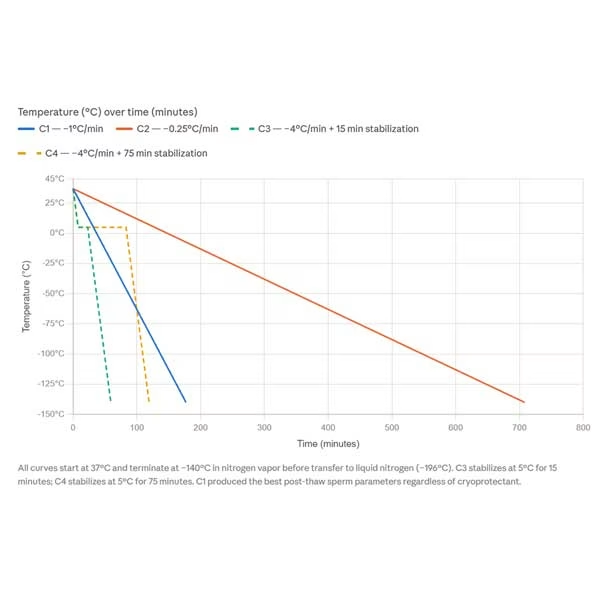
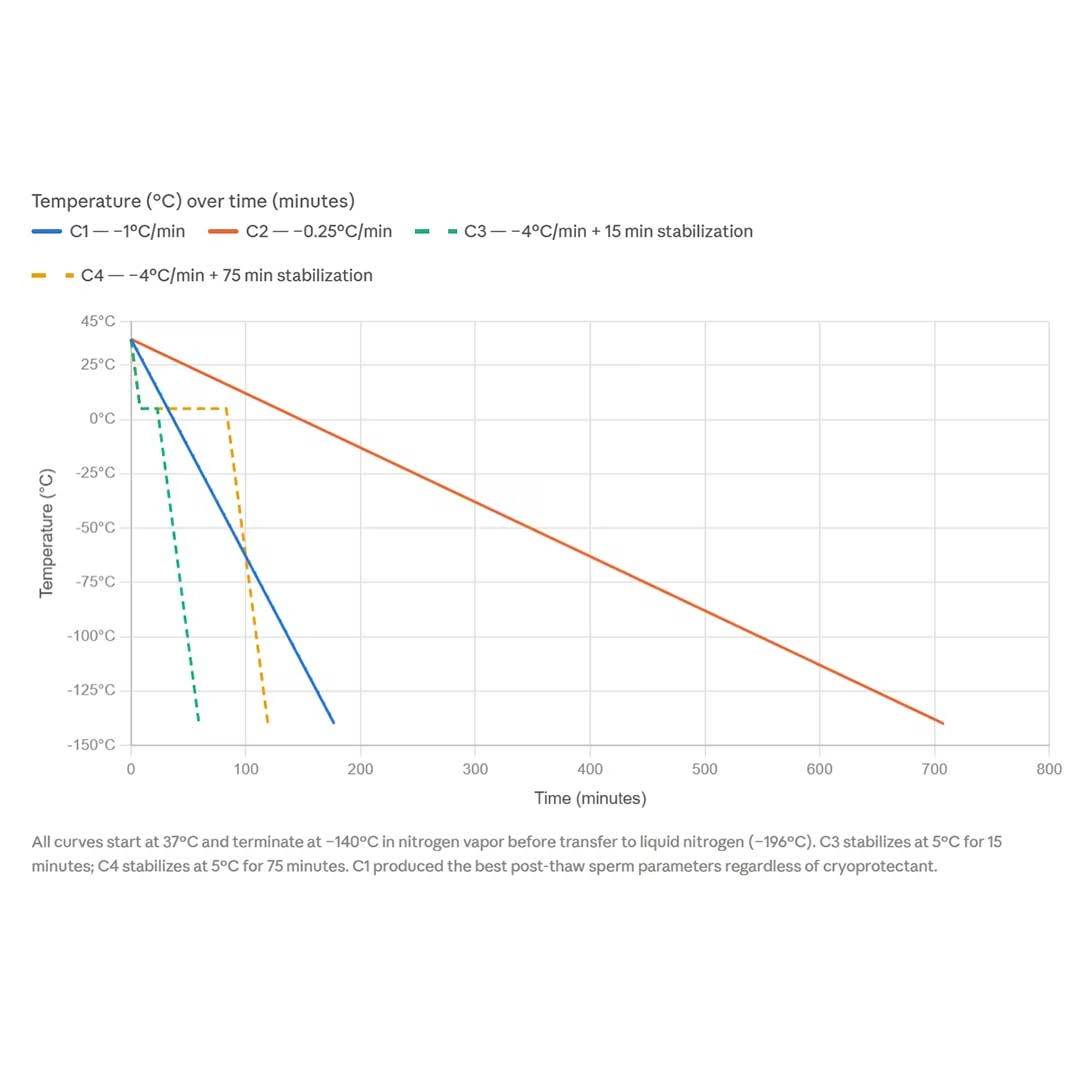
- Four cooling rates applied: –1°C/min, –0.25°C/min, –4°C/min with 15-minute stabilization, –4°C/min with 75-minute stabilization
- Post-thaw assessment: total and progressive motility, rapid sperm percentage (computer-assisted sperm analysis), plasma membrane stability, and mitochondrial membrane potential (flow cytometry)
Key Results — Cooling Rate:
- –1°C/min consistently produced the best post-thaw outcomes across all parameters and all cryoprotectants
- Slower and staged cooling rates produced progressively inferior results for motility and mitochondrial membrane potential
Key Results — Cryoprotectant:
- Glycerol: superior sperm kinetics and mitochondrial membrane potential; lower plasma membrane stability than dimethylformamide
- Dimethylformamide: highest plasma membrane stability; moderate kinetics
- Methylformamide: similar kinetics to glycerol; intermediate plasma membrane stability
- Dimethylacetamide: lowest sperm kinetics across all parameters
Conclusions:
- A cooling rate of –1°C/min is the primary determinant of post-thaw sperm quality, regardless of cryoprotectant used
- Glycerol remains superior for sperm kinetics and mitochondrial function; dimethylformamide offers the strongest membrane protection
- Dimethylacetamide is not recommended as a standalone cryoprotectant for equine semen
(Frasson MS, Oliveira SN, Dell’Aqua Jr JA, Rodrigues LT, Cavaleiro TMS, Freitas-Dell’Aqua CP, Crespilho AM, de Mello Papa P, Segabinazzi L, Papa FO. 2025. Unraveling the effect of glycerol and amides and different cooling rates on post-thawed sperm parameters of equine frozen semen. Journal of Equine Veterinary Science 145:105286. https://doi.org/10.1016/j.jevs.2024.105286)