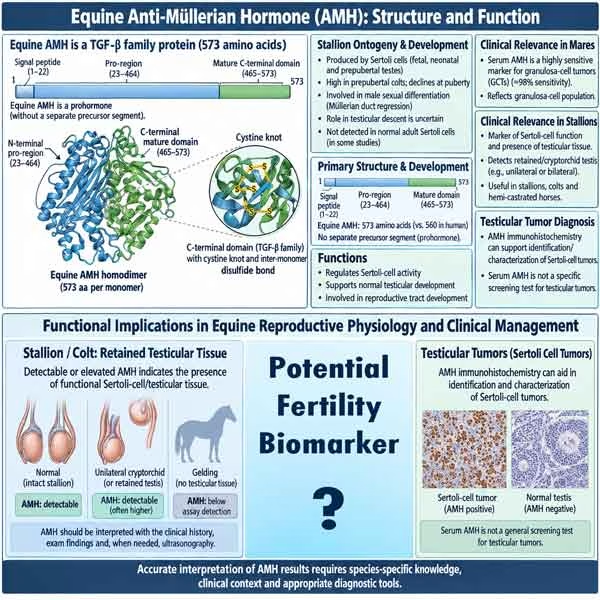
Anti-Müllerian Hormone as a Potential Fertility Biomarker in Stallions
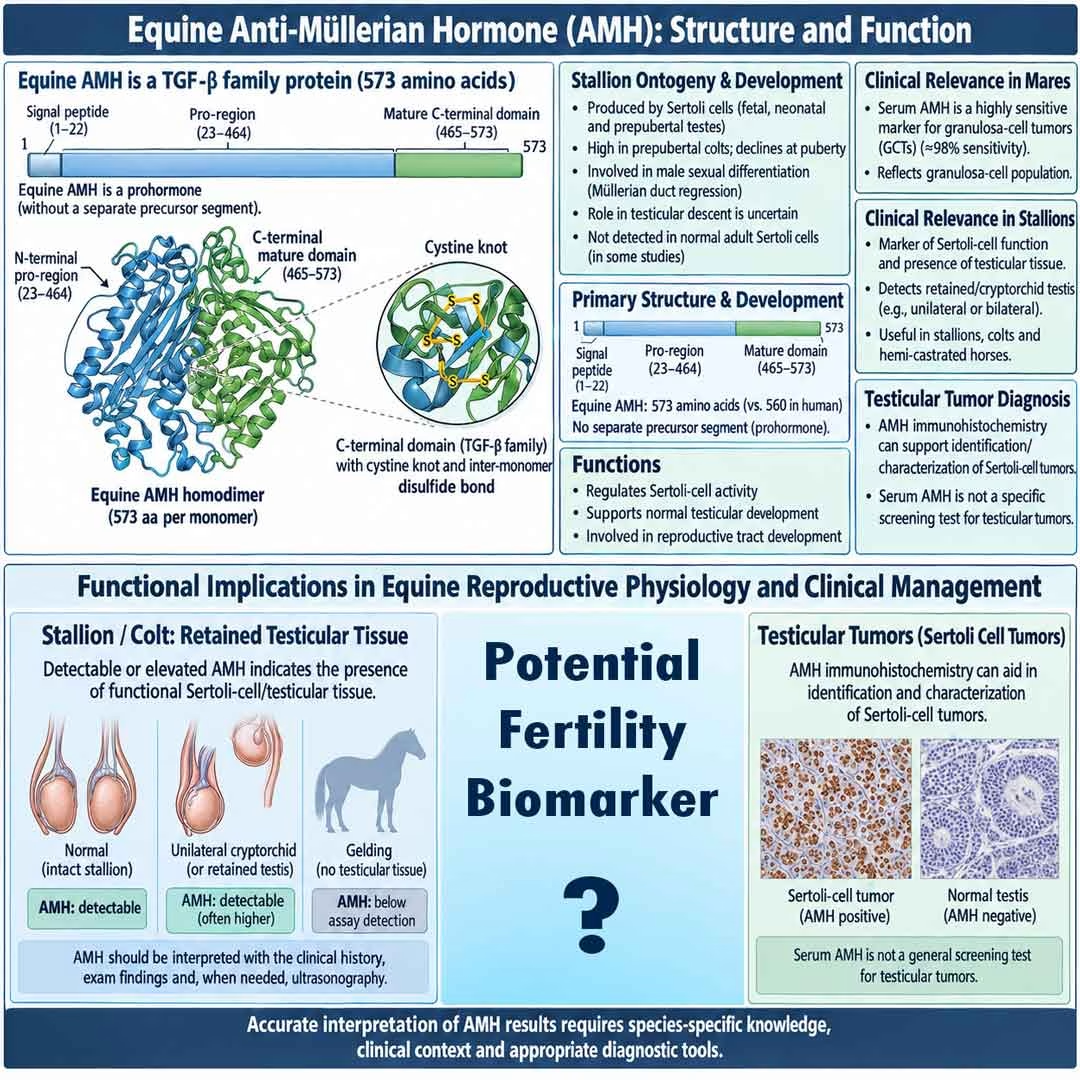 Anti-Müllerian hormone, secreted by Sertoli cells, is well-studied in mares but its relationship to stallion fertility remains poorly characterized. Building on evidence linking low serum anti-Müllerian hormone to poor semen quality in infertile men and dogs, this pilot study evaluated whether serum anti-Müllerian hormone concentration could predict breeding performance in stallions.
Study Design:
- 10 breeding stallions plus 1 stallion with confirmed testicular degeneration
- Classified as good breeders (n= not specified) and poor breeders based on veterinary observation across breeding careers
- Jugular blood samples collected; anti-Müllerian hormone measured by enzyme-linked immunosorbent assay
- Breeding season pregnancy success rates recorded; t-test and linear regression applied
Key Results:
- Anti-Müllerian hormone range across all stallions: 7.71–35.91 ng/ml (median 14.60 ng/ml)
- Good breeders: median 21.91 ng/ml; poor breeders: median 13.27 ng/ml
- Good breeders had significantly higher anti-Müllerian hormone than poor breeders (p=0.008)
- Stallion with testicular degeneration had the lowest concentration (7.71 ng/ml)
- Each 1 ng/ml increase in anti-Müllerian hormone associated with a 2 percentage point increase in pregnancy success rate (p=0.033)
- Model explained 41.41% of variance in fertility outcomes
Conclusions:
- Anti-Müllerian hormone concentration shows promising utility as a stallion fertility biomarker
- Testicular degeneration associated with lowest recorded values, supporting diagnostic potential
- Limitations include small sample size; larger multi-variable studies are warranted
(Sajecka OZ, Morrell J. 2025. Anti Mullerian Hormone as a potential biomarker of stallions fertility. Journal of Equine Veterinary Science 145:105321. https://doi.org/10.1016/j.jevs.2024.105321 – Presented in Association with and by Permission of the International Society for Equine Reproduction)